
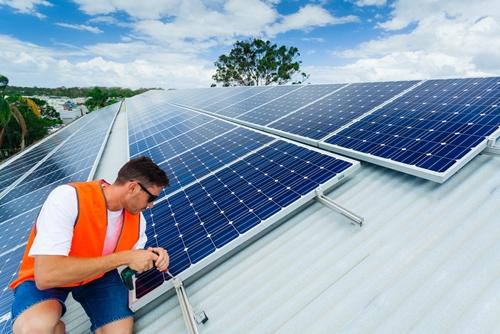
As we’ve written before on this blog, leasing and financing options for residential solar energy solutions have made this technology accessible to more families than ever before. New data from the California Solar Initiative (CSI), as analyzed by the U.S. Energy Information Administration (EIA), shows that these programs have been enormously successful with homeowners.
The EIA states that two-thirds of new solar installations completed in 2012 and 2013 under the CSI were third-party owned, meaning they were either leased by the resident or installed as part of a power purchase agreement (PPA). What is the difference between these two financing options?
- Leasing: Much like a car or apartment lease, solar panels can be rented to homeowners over an extended period of time, usually 15 to 20 years. During that time, homeowners pay a small monthly fee, but that fee is offset by the savings that the resident earns from net metering. Homeowners can usually secure these contracts without a down payment.
- PPA: With PPA contracts, a solar company builds panels on your rooftop and pays for the cost of the project. You then agree to buy power from those panels at a set, affordable rate that is competitive with what you’d pay for grid power.
In both cases, the solar installer covers the cost of any maintenance or repair issues that may come up over the life of the system, but these problems are few and far between.
If you’re interested in finding out whether your family qualifies for one of these two financing options, give West Coast Solar a call today and we can conduct a free solar site analysis at your place of residence.
Schedule A Free Consultation
The entire West Coast Solar team is excited to help you optimize your energy potential. Connect with us today to schedule your complimentary consultation to learn more about a home solar panel system or a commercial solar panel system. We look forward to hearing from you!
Recent Posts
Leasing vs. Buying Solar in Northern California Heading Into 2027: Why the Math Flipped This Year
If you are budgeting for home energy upgrades heading into 2027, the rules for paying for solar look very different than they did a year ago. A major split in…
Read MoreThe Q4 Commercial Solar Tax Playbook: 100% Bonus Depreciation Before Dec. 31 & Beating the 2027 Federal Credit Cutoff
For California business owners, wineries, agricultural operations, and warehouse operators, November and December are prime months for strategic capital investments. Between immediate 2026 write-offs and a hard federal deadline approaching…
Read MoreCalifornia’s Solar Property Tax Break Ends January 1, 2027: What Homeowners Need to Know Right Now
For over two decades, California homeowners have installed rooftop solar without triggering a property tax hike. That protection—known as the Active Solar Energy System Property Tax Exclusion—officially expires on January…
Read More