
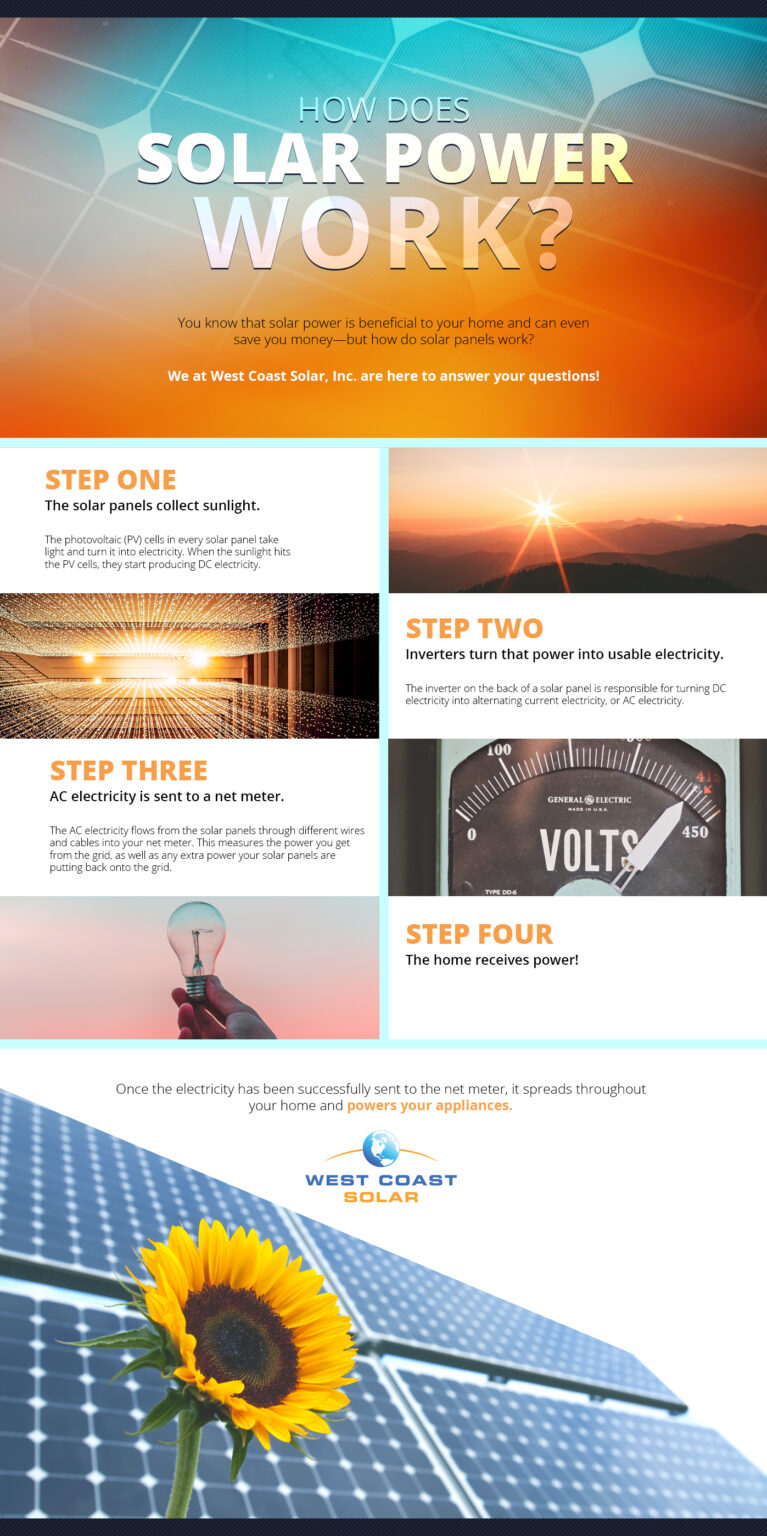
The sun is the number one source of energy for much of what we use today! Many homeowners and business owners are beginning to take the leap from grid to solar for many reasons. For example, solar panels can save you money on your electricity bills. These panels also help to lessen the impact we make on the environment. Even if you don’t have a solar panel system in place yet for your Sacramento home, it’s not too late. If you are like most people, however, you might be wondering how solar panels use all this sunlight to create electricity. How is the sunlight harnessed? How does it change into the electricity that can power our home? To explain the process as simply as we can, we have cut everything into four steps.
Solar panels collect sunlight.
Every solar panel houses cells that are referred to as photovoltaic (PV) cells. These cells take photons (aka light) and turn them into electricity. Specifically, they turn them into voltage. Once the sunlight hits the solar panel, the PV cells begin producing DC (direct current) electricity. This is a great start, but unfortunately, our homes can’t use DC electricity to be powered. This is where the rest of the solar panel process comes into play.
Inverters turn the power into usable electricity.
An inverter sits patiently on the back of each and every solar panel. This inverter is in charge of receiving electricity from the solar panels and then converting it into alternating current electricity. This type of electricity is also known as AC electricity, and it is the kind that is usable in our homes. Whether you need to power a toaster, your fridge, or your hair dryer, you need AC electricity!
AC electricity flows into the net meter.
The net meter is in charge of measuring both the power you pull from the grid, as well as the excess power your solar panels produce and put back onto the grid. The AC electricity flows from the solar panels through various cables and wires into the net meter to be measured and distributed.
The electricity is ready to go!
Once the electricity has all run through the net meter, it travels into your home and prepares to power all of your appliances. If your solar panels don’t produce enough to fully power your home, that’s totally alright! Your home will still be connected to the grid, and it can draw any remaining needed power from there instead. This allows your home to draw all the energy it needs without you noticing a difference.
Contact West Coast Solar, Inc.
If you would like to learn more about how solar panels work and what they can do for your home, it’s time to contact our professionals! We look forward to letting you know how solar can change the way you run your home, as well as how it can lessen your impact on the environment. Reach out now to learn more about our financing and installation options, as well.
Schedule A Free Consultation
The entire West Coast Solar team is excited to help you optimize your energy potential. Connect with us today to schedule your complimentary consultation to learn more about a home solar panel system or a commercial solar panel system. We look forward to hearing from you!
Recent Posts
How to Right-Size Your Solar Array for Future Home Energy Needs
Transitioning your home to clean energy is a major step toward long-term financial freedom and environmental sustainability. However, determining the exact system capacity your property requires involves looking beyond your…
Read MoreHow Home Solar Panels Turn Your Residential Rooftop Into an Energy Powerhouse
Switching your household to clean, renewable power is one of the most impactful decisions you can make for your wallet and the environment. By utilizing your residential rooftop to capture…
Read MoreWhy Professional Solar Panel Installation Is the Ultimate Home Energy Investment
Transitioning to solar power is one of the most effective ways for homeowners to achieve energy independence and reduce escalating monthly utility expenses. However, realizing the maximum return on your…
Read More