

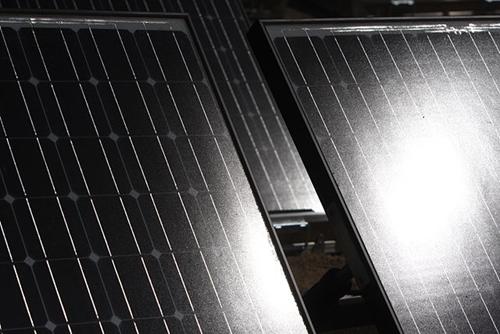
Recently, the U.S. military announced that Fort Bliss in El Paso, Texas, would be installing a $120 million solar panel array with a 20 megawatt capacity, providing 14 percent of the base’s electrical needs. But something unique about the system is that it will be financed using a power purchase agreement with El Paso Electric, who will be building the array in exchange for an agreement that the base will buy the power it generates.
What exactly is a power purchase agreement, and why would an institution use this method to integrate solar energy into its energy plan?
The answer is relatively simple. An institution, such as a military base, school, or large business, agrees to have a solar panel system designed and built on their premises. The developer who constructs the array pays for the building and operating expenses, saving the institution the upfront costs that come from building large-scale photovoltaic systems. In exchange, the entity agrees to buy power generated by the system at a set price.
There are incentives for both parties to engage in such an arrangement. The organization or firm buying power will get competitive electricity rates that are often lower than if they were buying directly from the grid. The developer gets a steady stream of revenue from the electricity is sells, plus they can take advantage of various tax rebates and incentives for having built a renewable energy source.
A solar PPA allows organizations and companies to enjoy the advantages of renewable, clean electricity without having to pay the upfront costs. If you’re interested in finding out more, contact West Coast Solar today.
Schedule A Free Consultation
The entire West Coast Solar team is excited to help you optimize your energy potential. Connect with us today to schedule your complimentary consultation to learn more about a home solar panel system or a commercial solar panel system. We look forward to hearing from you!
Recent Posts
PG&E’s New Flat Fee Just Hit Your Bill: Does Solar Still Make Sense?
If you opened your latest PG&E statement and noticed a sudden, unavoidable fee, you aren’t alone. In March 2026, PG&E officially rolled out its “Base Services Charge”—an automatic fee of…
Read MoreUpgrading Your HVAC This Year? Why California’s 2026 Building Codes Make Solar + Heat Pumps a No-Brainer
If your old gas furnace is on its last legs, you are about to encounter the new reality of California real estate. On January 1, 2026, the updated California Energy…
Read MoreSolar Panels vs. Bidirectional EV Charging: Do You Still Need a Tesla Powerwall in 2026?
The California energy landscape is evolving fast. With automakers expanding bidirectional charging across their 2026 vehicle lineups and models like the Ford F-150 Lightning and Tesla Cybertruck already on the…
Read More