

Thermophotovoltaics are seen by many in the solar community as having huge potential for increasing the efficiency of solar cells. With commercially available photovoltaic modules, a semiconductor absorbs infrared light and converts it into electricity. Because infrared rays represent only a fraction of the energy emitted by the sun, this means that solar panels generally only convert about 20 percent of the sunlight that hits them into usable power, while the remaining energy is either lost as heat or pass through the panels.
But thermophotovoltaics provide a workaround for this problem. Like conventional panels, a thermophotovoltaic unit has a semiconductor layer that responds to infrared rays. But an intermediate layer made up of an absorber and emitter intercepts other frequencies of light. The absorber converts them to heat, which causes the emitter to produce infrared light to be processed into electricity by the semiconductor.
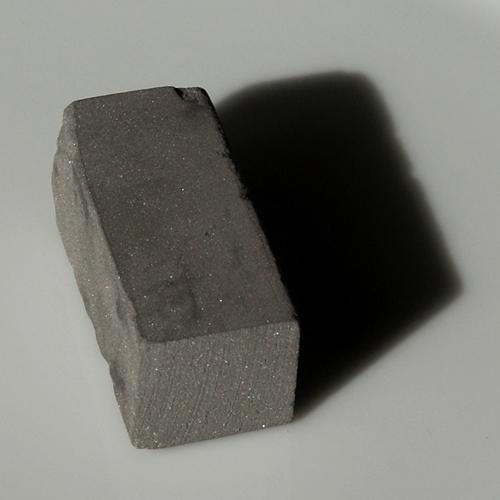
Until recently, scientists had been unable to create an intermediate layer that could handle temperatures above 1,800 degrees Fahrenheit, which is critical for making the technology work . But researchers at Stanford University, North Carolina State and the University of Illinois-Urbana Champaign have developed a new thermophotovoltaic system that could lead to more efficient solar panels. As reported by Solar Daily, they used a sheet of tungsten coated in a nanolayer of a ceramic material, which can handle temperatures as high as 2,500 degrees. Solar panels made using this technology could potentially convert 80 percent of the light that hits them into electricity.
Solar panel technology is changing all the time, but California homeowners should understand that they need not wait for these developments to be commercialized in order to enjoy the benefits of solar power. For more information on how your family can rely on Northern California solar energy, contact West Coast Solar today.
Schedule A Free Consultation
The entire West Coast Solar team is excited to help you optimize your energy potential. Connect with us today to schedule your complimentary consultation to learn more about a home solar panel system or a commercial solar panel system. We look forward to hearing from you!
Recent Posts
PG&E’s New Flat Fee Just Hit Your Bill: Does Solar Still Make Sense?
If you opened your latest PG&E statement and noticed a sudden, unavoidable fee, you aren’t alone. In March 2026, PG&E officially rolled out its “Base Services Charge”—an automatic fee of…
Read MoreUpgrading Your HVAC This Year? Why California’s 2026 Building Codes Make Solar + Heat Pumps a No-Brainer
If your old gas furnace is on its last legs, you are about to encounter the new reality of California real estate. On January 1, 2026, the updated California Energy…
Read MoreSolar Panels vs. Bidirectional EV Charging: Do You Still Need a Tesla Powerwall in 2026?
The California energy landscape is evolving fast. With automakers expanding bidirectional charging across their 2026 vehicle lineups and models like the Ford F-150 Lightning and Tesla Cybertruck already on the…
Read More